

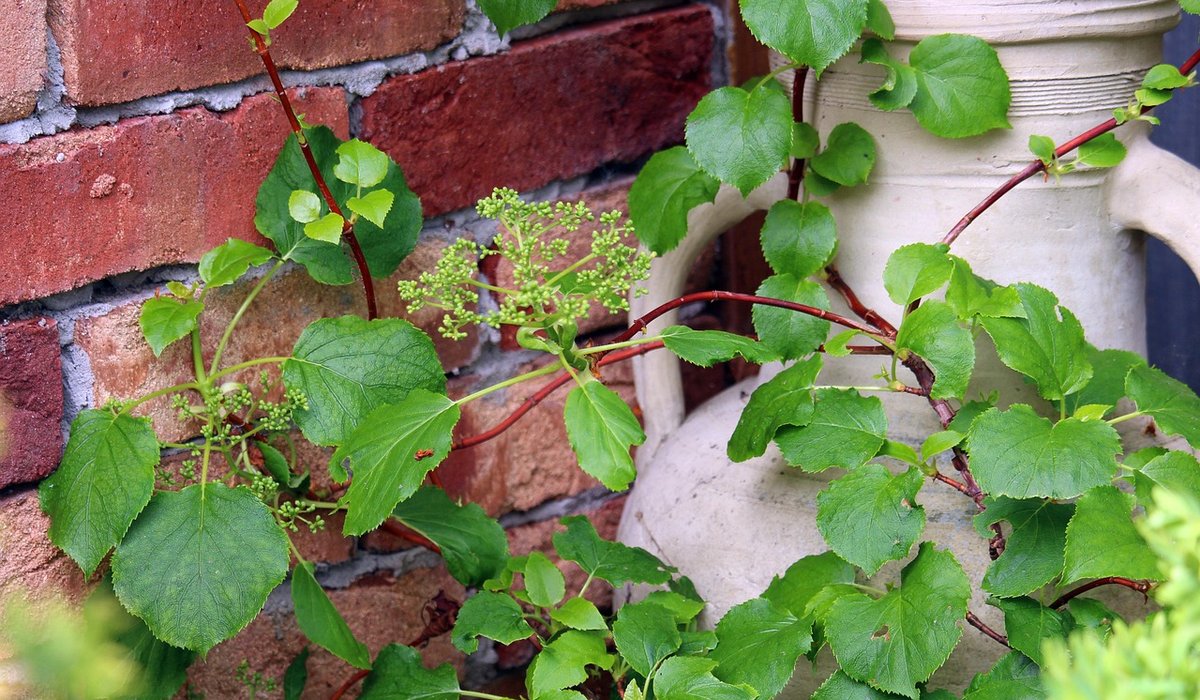
In an open garden, scent gets carried off on the breeze. In a courtyard it does something quite different. Walls, fences and paving cut down air movement, so fragrance drifts a metre or two and then simply hangs there. That means the wind won't do the work for you. If you want to smell something, you have to plant it close to where you sit.
So before you buy a single plant, take a chair outside and sit in it. Look at the space within arm's reach, and a little beyond. That's your scent zone. A honeysuckle clambering up a wall three metres away will look lovely and smell of almost nothing from your seat, while the same plant beside your elbow will fill the whole corner on a warm evening.
Warmth matters as much as distance. Scent is released more freely when the air is warm, which is why courtyards with a south or west-facing wall and stone paving are so generous. The paving soaks up heat all day and gives it back after teatime, lifting fragrance just when you're most likely to be sitting out.
You don't need many. Three or four well-chosen plants will scent a small courtyard far better than a scattergun of half-hearted ones.
Pots suit a courtyard because you can move them to the best spot and turn them as they grow. Use the largest pot you can live with — a 30cm pot for a honeysuckle, 35cm or more for jasmine — because big volumes of compost stay damp and keep roots cool. Terracotta looks right against old brick and lets roots breathe, though it dries out faster than glazed ceramic.
Most of us use a courtyard in the evening, so plant for the evening. Several of the best scented plants have evolved to attract night-flying moths, which is why they release their fragrance after the sun goes down.
Nicotiana, particularly the tall white Nicotiana sylvestris, is unbeatable for this. So is night-scented stock, which you can sow in a pot in April and forget about until July, when it will scent the whole courtyard after dark. Evening primrose works the same way. Add a white jasmine and you have an evening garden that smells far more expensive than it cost.
Keep an eye on the mix, though. Two or three strong scents in a small space become a muddle. One dominant fragrance, with something light and leafy underneath, is far more pleasing.
A courtyard can smell of something in almost every month if you plan the succession rather than buying everything in June.
Plant herbs where you brush past them. Rosemary, thyme, lemon balm and mint all release scent on contact, so put them at the edge of a path or beside the step. Mint is best kept in its own pot, or it will take over.
If your courtyard is very enclosed, break up the still air slightly with an open trellis rather than a solid panel. A little gentle movement carries fragrance around a corner instead of leaving it stranded in one spot. Keep pots clean, deadhead regularly to keep flowers coming, and don't overplant — a few plants given room to flower will scent a courtyard far better than a crowded collection that never quite gets going.

Quaintbower An honest, everyday look at the things that make life a little better — with advice you can actually use.

Quaintbower An honest, everyday look at the things that make life a little better — with advice you can actually use.

Turn a quiet corner into a sheltered retreat with a bench, soft cushions, and climbing plants. This guide covers layout, privacy, and weatherproof fabrics.

Comments
ALina Kelian
19th May 2018 ReplyQuaintbower An honest, everyday look at the things that make life a little better — with advice you can actually use. ullamco laboris nisi ut aliquip ex ea commodo consequat.
Rlex Kelian
19th May 2018 ReplyQuaintbower We spend our time finding what works so you don't have to, and sharing exactly what made the difference. ullamco laboris nisi ut aliquip commodo.
Roboto Alex
21th May 2018 ReplyQuaintbower No rushing, no fuss — just thoughtful notes and practical help, written by people who care. ullamco laboris nisi ut aliquip ex ea commodo consequat.