

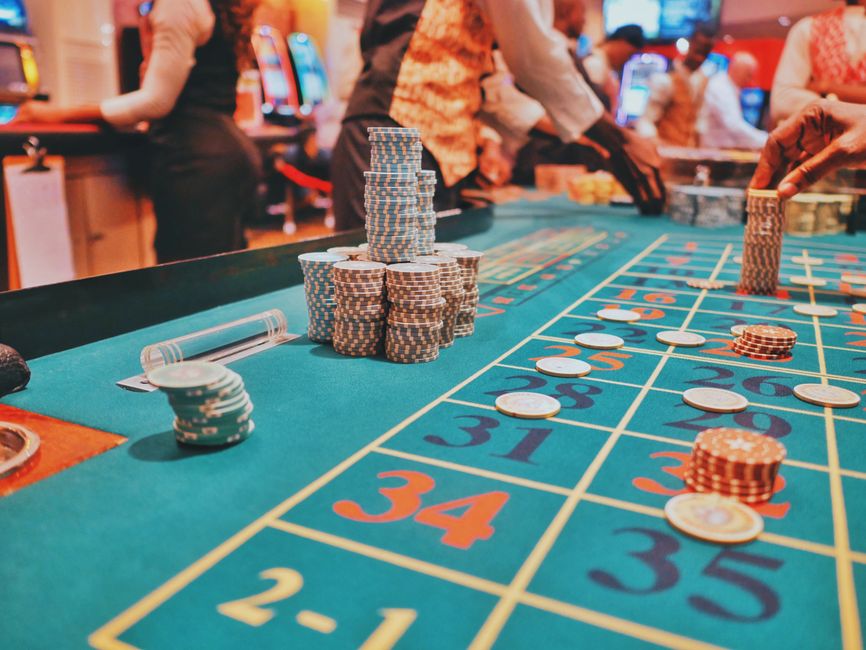
You’ve probably noticed it: the line between a casual flutter and a calculated investment is thinner than ever. iGaming isn’t just about luck anymore—it’s a blend of psychology, math, and bankroll management. Whether you’re spinning slots at 3 a.m. or grinding a poker tournament on a Sunday afternoon, the players who consistently walk away ahead aren’t necessarily the luckiest. They’re the ones who treat every session like a puzzle, not a lottery ticket.
I’ve spent years watching casual players burn through bonuses and pros squeeze value from the same games. The difference? A framework. Let’s break down the strategies that actually move the needle across casino games, slots, poker, and sports betting.
New players often fixate on winning sessions. Veterans obsess over expected value. The house edge on a standard blackjack table (using basic strategy) hovers around 0.5%. On American roulette, that double-zero wheel gives the house a 5.26% advantage. That’s not a death sentence—it’s information. The smaller the edge, the longer your bankroll survives, and the more time you have to capitalize on short-term variance.
Take blackjack. If you swap a 6:5 payout table for a 3:2 one, you cut the house edge by nearly 1.4%. That single rule change is worth more than counting cards for most recreational players. Similarly, in baccarat, always bet the Banker (1.06% edge) unless you’re chasing a pattern. The Player bet? 1.24%. Tie bets? A brutal 14.36%. Yet casinos fill tie bets because they pay 8:1 and feel exciting. Excitement is expensive.
Slots are the most misunderstood iGaming product. Players tap a button, see flashing lights, and assume randomness is uniform. It’s not. Two slots with identical 96% RTP can behave completely differently. The key is volatility—how payouts are distributed.
A low-volatility slot like Starburst pays small, frequent wins. Your bankroll lasts longer, but a 500x jackpot is rare. High-volatility slots like Bonanza or San Quentin can eat 200 spins without a single meaningful hit, then drop a 1,000x multiplier. Neither is “better”—they suit different goals. Want to grind for comps? Low volatility. Chasing a screenshot-worthy win? High volatility with a strict stop-loss.
Also, ignore the “hot machine” fallacy. Modern slots use random number generators (RNGs) that recalculate on every spin. A machine that hasn’t paid out in two hours is no more likely to hit than one that just paid. The only real levers you control are stake size, session length, and game choice.
One concrete tip: check the RTP in the game’s help menu. A 94% RTP slot costs you $6 per hour on $100 of spins. A 97% RTP slot costs $3. Over a 10-hour weekend, that’s the difference between a dinner and a deposit.
Poker is the only iGaming vertical where a skilled player can consistently beat the game. But “skilled” isn’t about bluffing every hand. It’s about three pillars: position, range construction, and tilt control. For up-to-date information, visit nhacaitangtien.com.co.
Position is simple: acting last gives you more information. In a nine-handed cash game, the button wins about 15% more pots than the small blind. That’s not magic—it’s math. If you’re playing too many hands from early position, you’re leaking money.
Range construction means thinking in probabilities, not specific cards. When a tight player raises from under the gun, they’re not holding 7-2 offsuit. They’re representing a range of maybe 12-15% of hands. If you call with a weak ace, you’re dominated more often than not. Use tools like GTO Wizard or Flopzilla to visualize ranges—even 10 minutes of study beats another hour of zooming.
And then there’s tilt. The silent bankroll killer. After a bad beat, your decision-making degrades by 20-30% according to behavioral studies. The fix? A physical trigger. Stand up, walk away for five minutes, or set a hard rule: three buy-ins lost = session over. No exceptions. Pros don’t outplay you on every hand—they outlast your emotional crashes.
Betting on sports without a plan is just donating to the sportsbook. The two most underrated edges are line shopping and unit sizing.
Line shopping means comparing odds across multiple books. A moneyline on the Chiefs might be -145 at one sportsbook and -130 at another. On a $100 bet, that 15-cent difference saves you $11.50 if the bet wins. Over 200 bets a year, that’s $2,300—just from opening three tabs.
Unit sizing is the discipline of betting the same percentage of your bankroll per play. Most pros use 1-2% per unit. If your bankroll is $1,000, a unit is $10-$20. That protects you from a 10-game losing streak (which happens to everyone). Chasing losses with a 10% unit is how you go broke by Tuesday.
Also, understand the difference between a sharp bet and a square bet. Sharp money moves lines. If you see a line drop from -3 to -2.5 on an NFL game, that’s often injury news or professional action. Following steam can be profitable, but only if you’re fast and disciplined.
Every strategy above collapses without bankroll management. I don’t care if you’re a slots grinder or a poker semi-pro—separate your gambling funds from your rent money. A common rule: never risk more than 5% of your total bankroll on a single day across all games. That means if you have $500 dedicated to iGaming, your daily loss limit is $25. It sounds restrictive, but it keeps you in the game long enough to actually learn.
Another tip: withdraw profits regularly. Casinos and sportsbooks design their interfaces to keep money in play. Set a win goal (e.g., double your session buy-in) and cash out half. You’ll thank yourself when variance swings.
iGaming rewards patience more than any single trick. The players who last aren’t the ones who hit a 10,000x slot win on their first spin—they’re the ones who understand that every bet is a data point, every session a small experiment. Master the house edge, respect volatility, study ranges, shop lines, and protect your bankroll. Do that, and you stop being the mark. You become the player the casino actually worries about.

Quaintbower An honest, everyday look at the things that make life a little better — with advice you can actually use.

Quaintbower An honest, everyday look at the things that make life a little better — with advice you can actually use.

Discover reliable climbers that tolerate shade and still bring colour to gloomy walls. Includes planting tips and pruning advice for healthy growth.

Comments
ALina Kelian
19th May 2018 ReplyQuaintbower An honest, everyday look at the things that make life a little better — with advice you can actually use. ullamco laboris nisi ut aliquip ex ea commodo consequat.
Rlex Kelian
19th May 2018 ReplyQuaintbower We spend our time finding what works so you don't have to, and sharing exactly what made the difference. ullamco laboris nisi ut aliquip commodo.
Roboto Alex
21th May 2018 ReplyQuaintbower No rushing, no fuss — just thoughtful notes and practical help, written by people who care. ullamco laboris nisi ut aliquip ex ea commodo consequat.